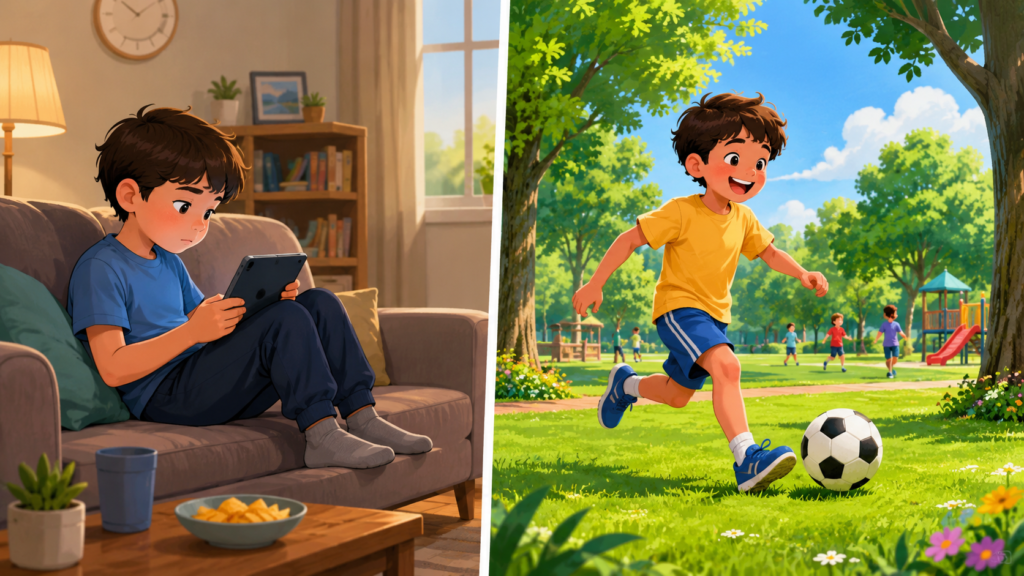
Screens are now a normal part of family life. Children use mobiles, televisions, tablets, computers, and gaming devices for learning, entertainment, talking to family, and relaxing. Screen time means the total time a child spends in front of any screen in a day.
The goal is not to remove screens completely. The goal is to help children use screens in a healthy, safe, and balanced way.
What Is Healthy Screen Time?
Healthy screen time means using screens for useful and age-appropriate activities, such as:
- Learning something new
- Attending online classes
- Talking to family members
- Creating art, music, or videos
- Reading, storytelling, or skill-building
- Relaxing with suitable content
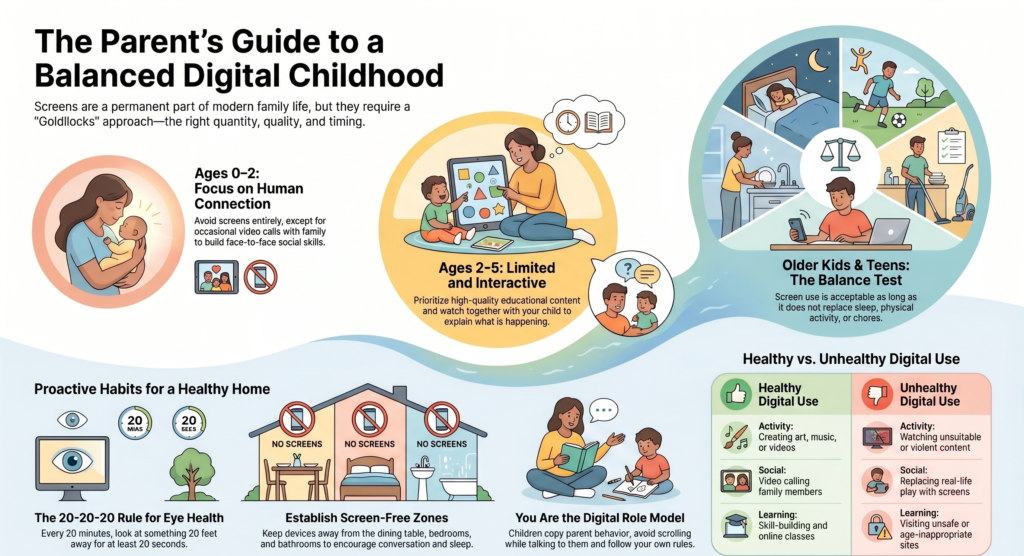
Unhealthy screen time includes watching unsuitable videos, playing violent games, visiting unsafe websites, using screens for too many hours, or replacing sleep, study, play, and family time with screens.
How Much Screen Time Is Too Much?
Screen time becomes too much when it starts affecting important parts of a child’s life, such as sleep, outdoor play, studies, meals, hobbies, or family time.
For Children Below 2 Years
Children below 2 years should avoid screens, except for occasional video calls with close family members. At this age, children learn best through talking, touching, playing, and face-to-face interaction.
For Children Aged 2 to 5 Years
For young children, screen time should be limited. Less is better. Parents should sit with the child and choose simple, educational, and interactive content.
For Older Children and Teenagers
For older children, the focus should be on balance. They need enough time for:
- Sleep
- Physical activity
- Schoolwork
- Meals
- Hobbies
- Family conversations
- Offline friendships
If screens are taking away time from these activities, screen time should be reduced.
Why Too Much Screen Time Can Be Harmful
Too much screen use can affect children in many ways.
Physical Health
Long screen hours may lead to less physical activity, weight gain, eye strain, headaches, poor posture, neck pain, back pain, wrist pain, and disturbed sleep.
Mental and Emotional Health
Excessive screen time may affect concentration, increase irritability, encourage instant gratification, and expose children to cyberbullying or unsafe content. It may also increase anxiety, sadness, fear of missing out, or dependence on digital devices.
Social Life
Children need real conversations, play, and emotional connection. Too much screen time can reduce social interaction and may make some children more socially anxious.
Studies
When screens replace homework, reading, sleep, or attention in class, school performance can suffer.
Are Screens Always Bad?
No. Screens can be helpful when used wisely. Digital devices can support learning, communication, creativity, reading, and skill-building. They can also help children stay connected with friends and relatives. Co-viewing or co-playing with parents can even improve bonding and make screen use more meaningful.
The key question is: “Is this screen use helping my child or harming my child?”
When Should Children Start Using Devices?
For very young children, real-life interaction is more important than digital interaction. Children below 2 years should avoid screen exposure as much as possible.
After 2 years of age, parents can slowly introduce selected content for a short time. It is better when parents watch along, explain what is happening, and choose educational programs.
Older children and teenagers may use devices for study, communication, and recreation, but they still need clear time limits and parental monitoring.
Social Media: What Parents Should Know
Social media can help children connect, learn, share creativity, and feel supported. But it also has risks, such as fake news, inappropriate content, cyberbullying, privacy problems, pressure for likes, and contact with strangers.
Before allowing social media, parents should:
- Know the platform themselves
- Check whether it is age-appropriate
- Talk to the child about why they want to use it
- Discuss privacy and safety
- Set clear rules about time and content
- Keep communication open
Children should know that they can come to parents without fear if something online makes them uncomfortable.
Teach Good Online Manners
Children need to learn that online behavior matters. Good digital manners include being kind, respectful, and careful.
Teach children to:
- Never post hurtful messages
- Use polite language
- Avoid sharing passwords, addresses, phone numbers, or private details
- Think before posting photos or comments
- Never meet an online friend alone
- Report unsafe or hurtful behavior to a trusted adult
- Remember that online posts can leave a digital footprint
A simple rule for children is: “Before you post, ask yourself — is it true, kind, safe, and necessary?”
What to Do If Your Child Faces Cyberbullying
If your child receives repeated hurtful messages or online threats, stay calm and supportive.
Tell your child that it is not their fault. Ask them not to reply to the bully. Save screenshots or messages as proof. Block the sender. Report the account on the platform. Inform the school if classmates are involved. If the matter is serious, seek help from the proper authorities.
Most importantly, make your child feel safe and heard.
Simple Digital Rules for Every Home
Children feel more secure when rules are clear and loving. Family screen rules should be practical and age-appropriate.
Keep Screens Away Before Bedtime
Switch off screens at least 1 hour before sleep. Screen use close to bedtime can disturb sleep.
Create Screen-Free Zones
Keep some places screen-free, such as the dining table, bedroom, bathroom, kitchen, and vehicles. This helps children enjoy meals, sleep, and conversations without distraction.
Have Screen-Free Family Time
Choose a daily or weekly time when everyone keeps devices away. Use this time for talking, walking, playing, cooking, reading, or family games.
Avoid Screens During Homework
When children are doing offline homework, keep unnecessary devices away. This improves focus and reduces multitasking.
Watch Together
For younger children, co-viewing is very helpful. Parents can explain, ask questions, and help children understand what they are watching.
Protect the Eyes and Body
Long screen use can strain the eyes and body. Teach children healthy screen habits.
Use the 20-20-20 Rule
Every 20 minutes, look at something 20 feet away for 20 seconds. This helps reduce eye strain.
Sit Properly
Children should sit with a straight back, relaxed shoulders, feet supported, and the screen at eye level. While using a mobile, they should raise the phone instead of bending the neck too much.
Signs That Screen Use May Be Becoming a Problem
Parents should watch for warning signs. A child may need help if they:
- Cannot control screen use
- Gets very angry when asked to stop
- Craves screens all the time
- Lies about screen use
- Loses interest in friends, studies, hobbies, or outdoor play
- Continues using screens despite poor marks, sleep problems, or family conflict
When these signs are seen, parents should speak to a pediatrician or mental health professional.
Parents Must Be Role Models
Children learn more from what parents do than what parents say. If parents are always on the phone, children will copy that behavior.
Try to:
- Keep your phone away during meals
- Avoid scrolling while talking to your child
- Follow the same screen-free rules
- Show children how to use technology calmly and responsibly
Your own screen habits have a strong effect on your child’s screen habits.
Final Message for Parents
Screens are not enemies. They are tools. Like food, they need the right quantity, right timing, and right quality. A balanced digital life helps children learn, stay creative, remain connected, and grow safely.
The best approach is simple: guide your child, set loving limits, stay involved, and practice what you teach.