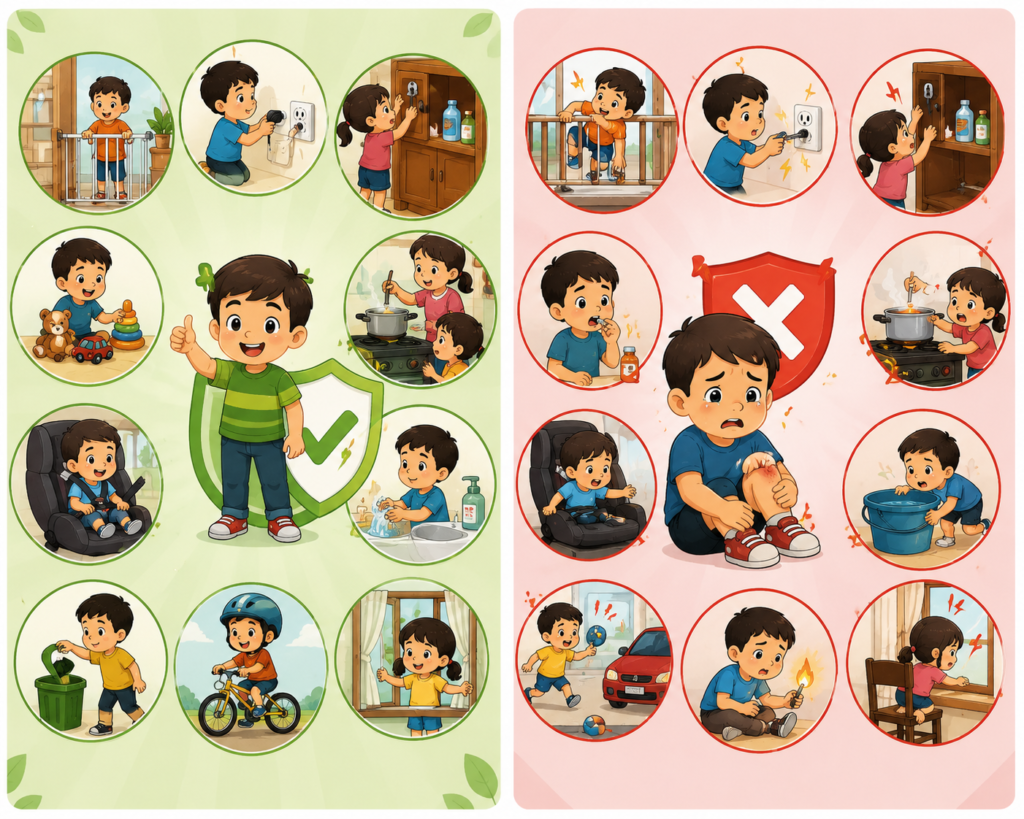
Children are naturally curious. They crawl, climb, run, touch, taste, pull, push, and explore everything around them. This curiosity is healthy and important for their growth, but it also means accidents can happen quickly. Many injuries in children happen inside the home, during sleep, while playing, in the bathroom, in the kitchen, during travel, or around water.
The aim is not to stop children from exploring. The aim is to make their surroundings safer so they can grow, play, and learn with fewer risks. This detailed guide explains practical safety steps that parents can follow at home and outside. The points are based on the safety guidance shared in the uploaded document.
Why Parents Need to Think About Accident Prevention
Most childhood accidents are not planned, but many can be prevented. A child does not understand danger the way an adult does. A toddler may think a tablet looks like candy. A crawling baby may go near a staircase. A child may pull a hot cup of tea from a table or touch an electric socket out of curiosity.
That is why parents need to look at the home from a child’s point of view. Sit or bend down to your child’s level and look around. You may notice sharp corners, open sockets, small objects, medicines, buckets of water, low windows, or climbable furniture that you normally ignore.
Simple changes can prevent serious injuries.
1. How to Make Your Home Safer for Children
Home is where children spend most of their time, so it should be the first place to check for safety risks.
Keep Staircases Safe
Once a baby starts crawling, staircases become dangerous. A child can crawl or walk toward the stairs and fall within seconds.
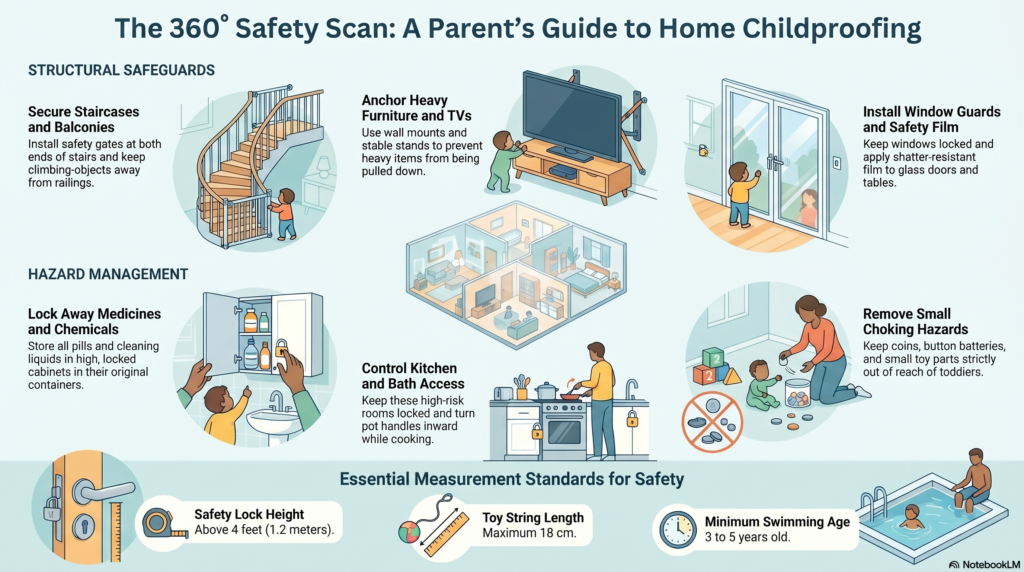
Use safety gates at the top and bottom of stairs. Make sure the gates are fixed properly and cannot be opened easily by the child. Do not leave toys, shoes, or loose objects on stairs because children may trip over them.
Make Balconies Safe
Balconies can be very risky, especially in apartments or upper floors. The balcony wall or railing should be high enough to prevent a child from falling.
Do not keep stools, chairs, boxes, flower pots, or tables near the balcony wall. Children may climb on these objects and try to look down. Balcony grills should not have horizontal bars that make climbing easy.
Protect Windows
Children love to look outside windows. Once they begin climbing, windows become a fall risk.
Keep upper-floor windows locked. Use window guards, grills, or safety nets. Window openings should be small enough so that a child cannot slip through. Do not place beds, sofas, chairs, or tables near windows because children may climb on them.
Choose Safe Furniture
Furniture should be strong and stable. A child should not be able to pull it down or knock it over.
Sharp corners of tables and cabinets should be covered with corner protectors or padding. Drawers should not be left open because children can run into them and get hurt. If possible, use drawer locks or drawer guards.
Flat-screen televisions should be fixed securely to the wall or attached to a stable stand. A child may pull a TV down while trying to touch or climb it.
Use Safer Glass
Glass doors, glass windows, and glass tables can cause cuts if they break. Use safety glass where possible. Another option is to apply shatter-resistant film to glass doors and windows. This helps reduce injury if the glass breaks.
Lock Away Tools and Sharp Objects
Tools such as saws, drills, blades, scissors, knives, gardening tools, and sharp household objects should be locked away. Lawn mowers, chain saws, and other sharp equipment must be kept completely out of reach.
Weapons, if present in the home, should be strictly locked and inaccessible to children and teenagers.
Make Baby Cots and Beds Safe
A baby cot should be safe in design. It should not have horizontal bars or footholds that allow the baby to climb out.
The space between cot bars should not be too wide because a baby’s head can get trapped. The mattress should be firm and fit properly. Cot locks should not be easy for the child to open.
For older children sleeping on a bed, especially if they move a lot during sleep, placing a soft mattress on the floor beside the bed can help reduce injury if they fall.
Keep the Floor Safe
Try to avoid slippery flooring. If the floor is wet, clean it immediately. Avoid loose rugs or mats that can slip. If there are steps or different levels inside the house, make them clearly visible and teach children to be careful.
A small night light or sensor light in the hallway can help prevent falls at night.
Keep Bathrooms and Kitchens Locked When Not in Use
Bathrooms and kitchens are among the most accident-prone areas in the home.
The kitchen has fire, hot food, boiling liquids, knives, and gas stoves. The bathroom has water, slippery floors, buckets, geysers, and cleaning liquids. Keep these areas locked when not in use, especially if there are toddlers at home.
Also, teach children from an early age that the kitchen platform, stove area, and bathroom are not play areas.
Place Locks at a Safe Height
Locks should be placed above the reach of small children, preferably above four feet. This helps prevent children from locking themselves or someone else inside a bathroom or room. It also prevents them from opening doors before they are old enough to manage safely.
2. Safe Sleep for Babies
Safe sleep is very important for babies, especially during the first year.
Always Put the Baby on the Back to Sleep
Babies should be placed on their back for every sleep, whether it is daytime sleep or nighttime sleep. This is the safest sleeping position for infants.
Avoid putting babies to sleep on their stomach or side unless a doctor specifically advises otherwise.
Use a Firm and Flat Sleeping Surface
The baby should sleep on a firm, flat mattress covered only with a fitted sheet. Avoid soft mattresses, pillows, quilts, cushions, thick blankets, and soft bedding.
Soft surfaces can cover the baby’s nose or mouth and increase the risk of suffocation.
Keep the Sleep Area Free of Soft Toys
Do not keep pillows, stuffed toys, loose blankets, or other soft items in the baby’s cot. These may look comfortable, but they can be dangerous for infants.
A simple and clear sleeping area is safer.
Keep the Baby’s Cot in the Parents’ Room
During the first year, it is helpful to keep the baby’s crib or cot in the same room where the parents sleep. The baby should have a separate safe sleeping space, but close enough for parents to see, feed, comfort, and monitor the baby.
Do Not Overheat the Baby
Do not cover the baby’s head while sleeping. Dress the baby according to the weather. Too many layers can make the baby too hot.
Keep Chargers and Wires Away
Do not charge a mobile phone near the baby’s cot or bed. Wires, chargers, and electrical devices should be kept away from the baby’s sleeping area.
Keep the Room Safe When Stepping Out
If you need to step out of the room for a short while, make sure the main door of the room is open and the attached bathroom is bolted or closed so the child cannot enter the bathroom alone.
3. How to Hold and Carry a Baby Safely
Many parents feel nervous while holding a newborn or an active baby. Safe holding gives both the parent and baby comfort.
Wash and Dry Your Hands First
Before lifting a baby, make sure your hands are clean and dry. Slippery or wet hands can make it difficult to hold the baby securely.
Support the Head and Neck
Newborn babies do not have strong neck control. Until around three months of age, always support the baby’s head and neck while lifting, holding, or carrying.
Cradle Hold
In the cradle hold, the baby’s head rests in the bend of your arm. Your hand supports the baby’s bottom, and your other arm wraps around the baby for support.
This is a comfortable position for feeding, calming, and carrying a newborn.
Shoulder Hold
In the shoulder hold, the baby rests against your shoulder. One arm supports the baby’s bottom, and the other hand supports the baby’s head and neck.
This position is commonly used after feeding or while burping the baby.
Belly Grip
In this position, the baby lies tummy-down along your arm. Your hand supports the chest and shoulder area, while the baby’s head remains slightly higher than the legs.
Some babies, especially those with colic, may feel comfortable in this position for a short time. However, the grip must always be secure.
Waist Hold for Older Babies
As babies grow, they may become restless while being carried. They may suddenly bend backward, twist, or push away.
For older infants, hold the baby close to your waist, with one of the baby’s legs in front and one behind your waist. Support the baby’s bottom and wrap your arm firmly around the body. Always keep a tight and careful grip.
Use Baby Carriers Carefully
Baby slings, carriers, and carrying bags can help parents carry babies safely while keeping their hands free. Choose one that is suitable for the baby’s age and weight. Make sure the baby’s face is not covered and the baby can breathe easily.
4. Prevent Accidental Swallowing and Poisoning
Toddlers explore by putting things into their mouth. This can lead to choking, poisoning, or serious internal injury.
Keep Medicines Out of Reach
All medicines should be kept in a locked cabinet or high shelf. This includes tablets, syrups, vitamins, painkillers, and adult medicines.
Never leave medicines on tables, bedsides, handbags, or kitchen counters.
Do Not Call Medicine Candy
Some adults call medicine “chocolate” or “candy” to make children take it easily. This is unsafe. A child may later look for the medicine and eat it thinking it is a sweet.
Always teach children that medicine is medicine and should only be taken when given by an adult.
Remove Expired or Unused Medicines
Medicines that are expired or no longer needed should be discarded safely. Do not keep old medicines lying around the house.
Keep Small Objects Away
Small objects can cause choking. Keep these away from babies and toddlers:
coins, buttons, beads, small toy parts, button batteries, nuts, popcorn, safety pins, small magnets, and bottle caps.
Button batteries are especially dangerous and need urgent medical attention if swallowed.
Store Chemicals Safely
Cleaning liquids, detergents, toilet cleaners, acids, mosquito repellents, pesticides, kerosene, and other chemicals must be kept away from children.
They should be stored in their original containers. Never store kerosene, acid, or cleaning liquids in soft drink or water bottles. A child may mistake them for something drinkable.
Use Child-Resistant Packaging
Products with child-resistant packaging are safer, especially for medicines, fuels, household chemicals, and pesticides. Even then, they should still be kept out of reach.
Watch Toddlers Closely
A toddler can pick up and swallow something within seconds. Active supervision is very important, especially when visiting someone else’s house, where safety arrangements may be different.
5. How to Choose Safe Toys for Children
Toys help children learn, but unsafe toys can cause choking, cuts, poisoning, or burns.
Choose Toys According to Age
Always check the age recommendation on the toy. Toys meant for older children may have small parts that are unsafe for younger children.
Avoid Small Parts
Do not give babies and toddlers toys with small detachable pieces. Marbles, small balls, coins, and tiny toy parts can block the windpipe and cause choking.
A safe toy for a young child should be large enough that it cannot be swallowed.
Check for Sharp Edges
Toys should not have sharp points, sharp corners, or broken edges. Broken toys should be repaired or thrown away.
Choose Strong and Unbreakable Toys
Young children often throw, bite, chew, and bang toys. Toys should be strong enough to handle rough use without breaking into dangerous pieces.
Check Paint and Art Materials
Toy paint should be lead-free. Crayons, paints, and art materials should be marked non-toxic.
Wash Stuffed Toys
Stuffed toys should be washable because they collect dust and germs. Avoid giving very small babies fluffy toys in the sleep area.
Be Careful with Battery-Operated Toys
Battery compartments should be secured with screws. Children should not be able to open the battery case. Button batteries can be extremely dangerous if swallowed.
Avoid Long Strings
Toys should not have long strings or cords, especially longer than about 18 cm, because they can get wrapped around a child’s neck or fingers.
Avoid Baby Walkers
Baby walkers are not recommended. They can move quickly and may lead to falls, burns, or injuries, especially near stairs or kitchens.
6. How to Prevent Burns and Scalds
Burns are common in children and can happen in the kitchen, bathroom, prayer area, or around hot appliances.
Keep Children Away While Cooking
Children should not be allowed near the stove while cooking, boiling milk, boiling water, frying food, or making tea.
If possible, keep young children out of the kitchen during cooking time.
Keep Gas Stoves and Cooking Surfaces Raised
Cooking should be done on a stable platform or stand, not on the floor. A stove on the floor is easier for a child to reach and can cause burns.
Turn Utensil Handles Inward
Pan and pot handles should face inward so that children cannot pull them down. Hot oil, water, milk, or curry can cause serious scalds.
Carry Hot Food and Drinks Carefully
Hot tea, coffee, soup, milk, and food should be carried carefully, especially around corners or narrow spaces. A child running suddenly into an adult carrying hot liquid can get badly burned.
Test Microwave-Heated Food
Food heated in a microwave may feel cool outside but be very hot inside. Always stir and test the temperature before giving it to a child.
Check Bath Water Before Bathing
Always test bath water before bringing the child into the bathroom. Mix hot and cold water properly. Never leave the hot water tap open.
Do not leave a child alone in the bathroom, even for a short time. Do not leave a young child in the care of another child during bathing.
Keep Fire Items Away
Matches, lighters, camphor, incense sticks, diyas, candles, crackers, and hot lamps should be kept away from children.
During festivals or prayers, children should be watched closely around flames.
Keep Hot Irons Away
Iron clothes in a fixed safe place. Keep the hot iron and its wire away from children. After ironing, keep the iron in a safe place until it cools down completely.
7. How to Prevent Electric Shock
Children are often attracted to switches, sockets, wires, and electrical appliances.
Keep Sockets Out of Reach
Electrical sockets should ideally be placed out of reach of toddlers. If sockets are within reach, use child-safe socket covers.
Keep Children Away from Open Wires
Open wires, damaged plugs, power lines, and transformer boxes are dangerous. Children should never be allowed to play near them.
Unplug Appliances When Not in Use
Unplug electrical devices when they are not being used. Keep appliance cords away from children.
Keep Electricity Away from Water
Electrical appliances should never be kept near water. This includes bathrooms, wet kitchen counters, and areas where children may spill water.
Teach Older Children About Wet Hands
Older children should be told not to touch switches, plugs, chargers, or electrical appliances with wet hands.
8. Car Travel Safety for Toddlers
Car safety is important even for short trips.
Seat Children in the Rear Seat
Toddlers should always sit in the rear seat of the car. The rear seat is safer than the front seat for young children.
Use a Child Car Seat
A proper child car seat should be used according to the child’s age, height, and weight. The seat should be fitted correctly in the car.
Holding a child in the lap while traveling is not safe because sudden braking can throw the child forward.
Keep the Child Lock On
Use the child lock while traveling so the child cannot open the door from inside.
Keep the Child Busy
Toddlers can become restless during travel. Carry safe toys, snacks, books, or simple activities to keep them engaged.
Drive Safely
Avoid speeding, sudden braking, phone use while driving, and other distractions. Safe driving protects the child and everyone else in the vehicle.
9. How to Prevent Drowning
Drowning can happen silently and quickly. It does not happen only in swimming pools or rivers. It can also happen at home.
Keep Bathroom Doors Bolted
Bathrooms should be closed or bolted, especially when toddlers are at home. Bolts should be placed high enough so young children cannot open them.
Avoid Bathtubs for Small Children
Bathtubs can be risky in homes with little children. A child can drown in very little water.
Do Not Store Water in Open Buckets
Small children can fall head-first into buckets. Avoid storing water in open buckets. If water must be stored, cover the buckets and keep the bathroom door closed.
Never Leave a Child Alone Near Water
Do not leave children alone in bathrooms, near buckets, bathtubs, swimming pools, ponds, wells, lakes, rivers, or the sea. Even a few minutes can be dangerous.
Teach Swimming at the Right Age
Children can usually start learning swimming after around 3–5 years of age, depending on their readiness. However, swimming lessons do not replace adult supervision.
Adults Should Learn Swimming and CPR
Parents and caregivers should learn basic swimming skills and CPR. This can be life-saving in an emergency.
Fence Home Pools
If there is a swimming pool at home, it should be fenced on all sides. The gate should close and latch by itself so children cannot enter the pool area alone.
Use Life Jackets
Children should wear life jackets near lakes, rivers, or the sea. They must still be closely watched by an adult.
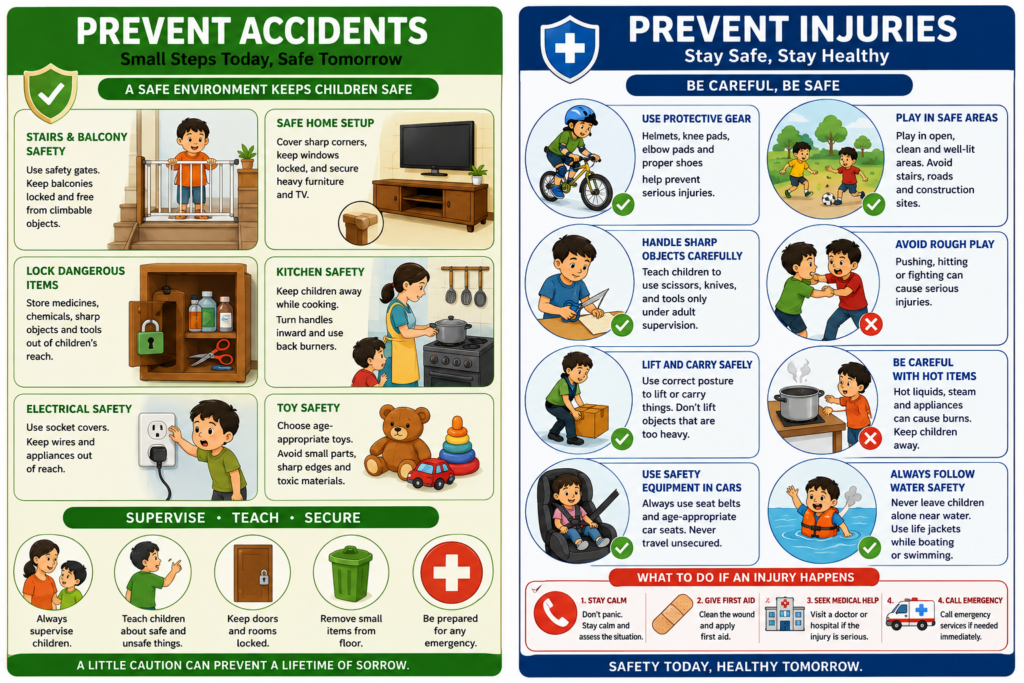
10. What Parents Should Do During an Emergency
Even careful families can face accidents. Being prepared helps parents act quickly instead of panicking.
Learn Basic First Aid and CPR
Parents, teachers, and caregivers should learn basic first aid and CPR. These skills can help during choking, drowning, burns, falls, or breathing emergencies until medical help arrives.
Keep Emergency Contacts Ready
Save important numbers in your phone and also write them down somewhere visible at home. Include:
your child’s doctor, nearest hospital emergency number, ambulance number, family contacts, and neighbors who can help.
Know the Nearest 24-Hour Hospital
Parents should know which nearby hospitals provide 24-hour emergency care for children. During an emergency, time is important.
Plan in Advance
Think through what you would do if an accident happened at night, on a holiday, or when one parent is away. Decide who will call the doctor, who will take the child to the hospital, and where you will go.
Preparation reduces confusion during a crisis.
A Simple Safety Checklist for Parents
Walk through your home and ask yourself:
Can my child fall from here?
Can my child climb this?
Can my child swallow this?
Can my child pull this down?
Can my child get burned here?
Can my child touch electricity here?
Can my child enter water here?
Can my child open this door or drawer?
This simple check can help you find hidden dangers before they cause injury.
Final Thoughts
Child safety is not about being overprotective. It is about being prepared. Children need freedom to explore, but they also need a safe environment.
Parents can prevent many accidents by making small changes: using safety gates, locking medicines, covering sockets, keeping hot liquids away, choosing safe toys, using car seats, supervising children near water, and learning basic first aid.
A safer home gives children the confidence to grow and gives parents greater peace of mind.