Becoming a parent means suddenly having hundreds of questions every day.
“Should my baby wear a cap indoors?”
“Are diapers safe?”
“Do milk teeth really matter if they fall out anyway?”
The truth is—small daily habits in early childhood can make a big difference to your child’s health, comfort, sleep, confidence, and even future development. Here is a simple, practical guide for parents based on pediatric recommendations that every family should know.
Why Baby Teeth Matter More Than Most Parents Think
Many parents assume that milk teeth are “temporary,” so they are not very important. But baby teeth do far more than just help children chew food.
Healthy baby teeth help children:
- speak clearly
- eat properly
- develop jaw growth normally
- guide permanent teeth into the correct position
- build confidence and self-esteem
In fact, these teeth stay for many years and influence future dental health significantly.
How Tooth Decay Starts Earlier Than You Expect
Tooth decay in children can begin surprisingly early—even before all teeth appear. Milk teeth have thinner enamel, making them more vulnerable to cavities.
One of the biggest causes?
Frequent exposure to sweet liquids such as:
- milk left in the mouth for long periods
- juices
- sweetened medicines
- shakes
- formula feeds
- ice creams
When food particles stay on the teeth, bacteria produce acids that slowly damage enamel and create cavities.
Early warning signs parents should not ignore
- White spots on teeth
- Light brown discoloration
- Sensitivity to cold or sweets
- Small holes in teeth
If untreated, dental decay can affect sleep, eating, speech, concentration, and learning.
Simple Habits That Protect Children from Cavities
Good dental care does not need to be complicated. A few consistent habits can make a huge difference.
Healthy dental habits for children
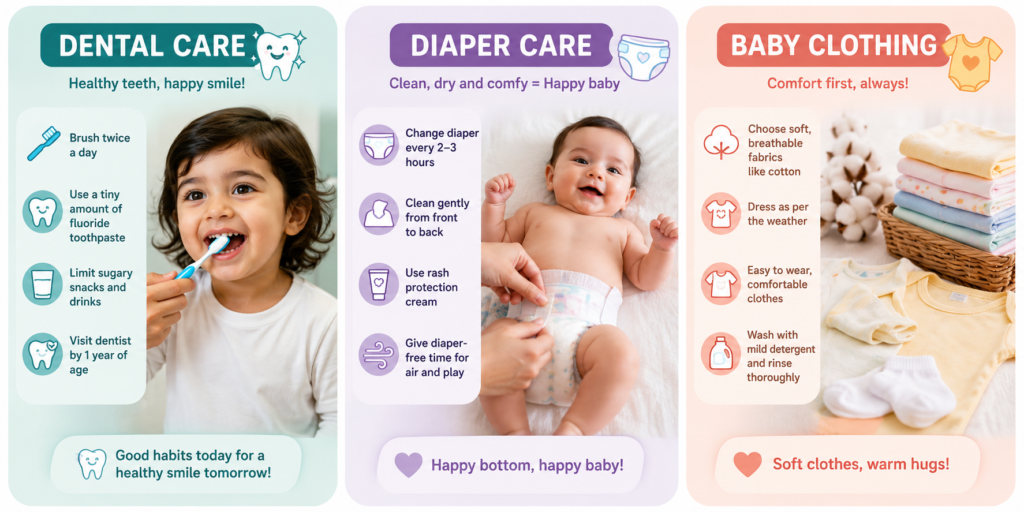
- Brush twice daily
- Avoid sticky sugary snacks
- Rinse the mouth after sweet foods or medicines
- Limit frequent nibbling between meals
- Encourage water instead of sugary drinks
Parents are often surprised to learn that constant snacking is harmful because teeth need time to recover after acid exposure from food.
When Should Dental Care Begin?
Dental care actually starts much earlier than most parents realize.
From birth to 6 months
- Clean gums gently
- Encourage exclusive breastfeeding
From 6–12 months
- Begin brushing once teeth appear
- Use only a rice-grain-sized amount of toothpaste
Around 3 years
- A pea-sized amount of toothpaste can be used once the child learns to spit properly
Regular dental visits should begin by 1 year of age.
Choosing the Right Toothbrush and Toothpaste
Children need toothbrushes designed specially for small mouths and sensitive gums.
Look for:
- soft bristles
- small heads
- comfortable grip
- child-friendly design
Replace toothbrushes every 3–4 months or sooner if bristles become damaged.
Fluoride toothpaste, when used in the correct quantity, helps strengthen teeth and prevent cavities.
The “Bottle at Bedtime” Habit That Harms Teeth
Many children develop severe cavities simply because they sleep with a bottle of milk or juice.
During sleep, saliva production decreases, so sugars remain on teeth for longer periods, increasing decay risk dramatically.
This condition is commonly called “baby bottle tooth decay.”
A simple change—avoiding bedtime bottles with sweet liquids—can protect your child’s teeth significantly.
Thumb Sucking: When Is It a Concern?
Thumb sucking is common in infancy and early childhood. Most children outgrow it naturally.
But if it continues beyond 5 years of age, it may:
- push teeth out of alignment
- cause overbite
- affect speech pronunciation
- alter jaw development
Persistent habits may sometimes require dental evaluation.
Are Diapers Safe?
This is one of the most common parenting debates.
The good news is: diapers are safe when used properly.
Disposable diapers can be very helpful:
- during travel
- at night
- for better sleep
But babies also need diaper-free time for healthy skin.
How to Prevent Diaper Rashes
Because diapers stay in direct contact with delicate skin, improper use can lead to:
- rashes
- irritation
- fungal infections
Smart diaper habits for parents
- Change diapers every 2–3 hours
- Change immediately after stools
- Allow diaper-free air time
- Use protective creams if needed
- Ensure the skin is dry before putting on a new diaper
These simple steps greatly reduce diaper-related skin problems.
When Should Toilet Training Begin?
There is no single “perfect age,” but experts encourage beginning toilet awareness gradually rather than delaying diaper use for many years.
Many children begin toilet training around 18–24 months. Prolonged diaper dependence beyond this may increase problems such as infections and skin irritation.
Every child is different, so parents should avoid pressure and focus on gentle, consistent training.
Swaddling: Helpful or Harmful?
Swaddling can help babies feel secure and sleep better. But constant swaddling is not recommended.
Important precautions
- Do not swaddle too tightly
- Allow babies to move their hips and legs freely
- Avoid overheating
- Unswaddle during feeding and playtime
Safe swaddling matters because overly tight wrapping may increase the risk of breathing difficulties and hip problems.
Do Babies Need Caps Indoors?
Many families believe newborns should always wear caps indoors.
In healthy full-term babies, this is usually unnecessary.
Overdressing can actually cause overheating. Parents can simply judge the environment based on their own comfort level.
Should Babies Wear Mittens?
Mittens are commonly used to prevent scratching. But prolonged mitten use may interfere with:
- feeding cues
- self-soothing
- skin-to-skin contact
Instead, keeping nails trimmed is usually a better solution.
Choosing the Best Clothes for Babies
Parents often get attracted to fancy baby outfits. But comfort and safety matter more than appearance.
Best clothing choices for babies
- Soft cotton fabrics
- Breathable clothes suitable for the climate
- Front-open designs
- Safe buttons and zippers
Cotton remains one of the safest and most comfortable fabrics for babies in warm climates like India.
Washing Baby Clothes Properly
A baby’s skin is extremely sensitive.
To reduce allergies and irritation:
- wash new clothes before use
- rinse thoroughly
- dry clothes in sunlight
- use mild, chemical-free detergents
- wash nappies separately
These small precautions help protect delicate skin.
Tight Jeans and Teenage Skin Problems
Teenagers often prioritize fashion over comfort. But very tight clothing can sometimes cause:
- inner thigh rashes
- fungal infections
- numbness or tingling
- restricted movement
Parents should encourage breathable, comfortable clothing—especially in hot and humid weather.
What Should Children Wear During Fever?
A common mistake during fever is overdressing the child.
Children with fever should wear:
- light cotton clothes
- comfortable breathable fabrics
Heavy blankets and excessive warm clothing may trap heat and worsen discomfort.
Final Thoughts for Parents
Parenting advice often comes from everywhere—family members, social media, advertisements, neighbors, and parenting groups. Sometimes this creates more confusion than clarity.
But many child-care practices are actually simple:
- keep things clean
- avoid overheating
- focus on comfort
- maintain gentle routines
- build healthy habits early
Small daily decisions—how you brush your child’s teeth, change diapers, choose clothes, or respond to feeding cues—quietly shape your child’s long-term health and wellbeing.
And most importantly, remember this:
perfect parenting is not required. Consistent, loving, informed parenting matters far more.