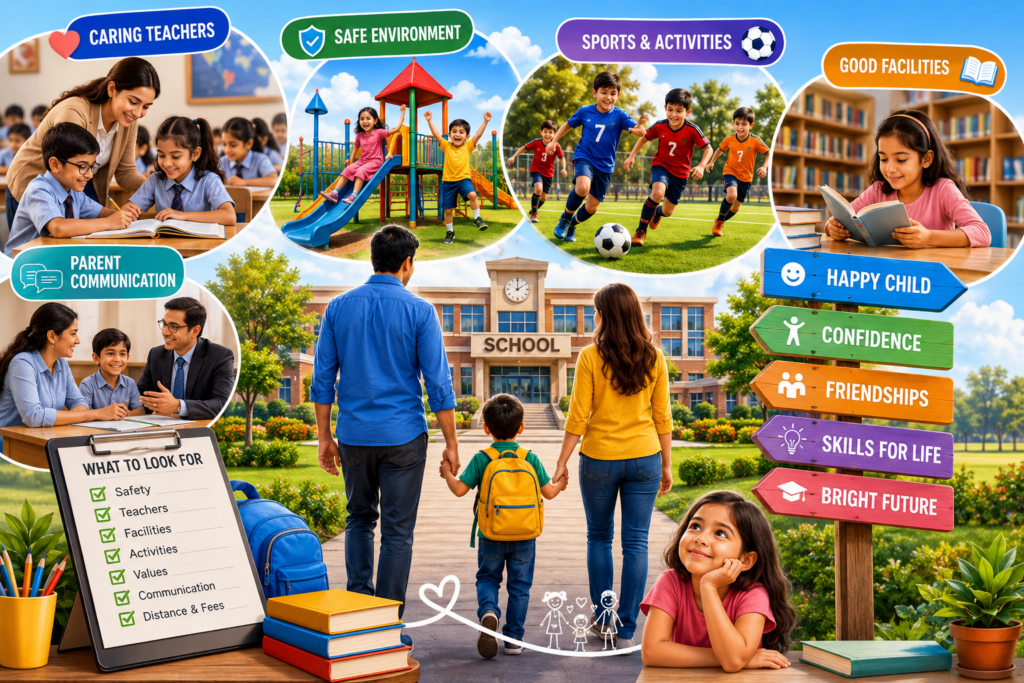
Choosing a school for your child is one of the most important parenting decisions you’ll ever make. It can feel overwhelming because there are so many options, opinions, and factors to consider. Should you choose a school with excellent academics? A school known for sports? One that is close to home? Or one with modern facilities and extracurricular activities?
The truth is, there is no universal “best school.” The right school is the one where your child feels happy, safe, supported, and inspired to learn every single day.
A school does much more than teach reading, writing, and mathematics. It helps shape your child’s personality, confidence, friendships, values, interests, and outlook on life. The environment children experience during their school years often stays with them long after they graduate.
If you’re feeling confused about where to begin, don’t worry. This guide will walk you through everything parents should consider before choosing a school, helping you make a thoughtful decision that suits your child’s unique needs.
Why Choosing the Right School Is So Important
When parents search for schools, it’s easy to get distracted by impressive buildings, high exam scores, or glowing advertisements. While these factors may seem attractive, they don’t always tell you how well a school will support your child’s overall growth.
Children spend a large part of their day at school. It becomes their second home—a place where they learn, play, make friends, overcome challenges, and discover who they are. That’s why the emotional environment of a school matters just as much as its academic reputation.
A child who feels comfortable and connected at school is more likely to:
- Look forward to going to school each morning.
- Participate confidently in classroom activities.
- Build meaningful friendships.
- Ask questions without fear of making mistakes.
- Develop independence and problem-solving skills.
- Handle challenges with confidence instead of giving up.
On the other hand, even a school with excellent academic results may not be the right choice if a child feels anxious, ignored, or constantly pressured.
The best schools don’t simply prepare children for exams—they prepare them for life.
There Is No “One-Size-Fits-All” School
One of the biggest mistakes parents make is trying to find the school that everyone else recommends.
The reality is that every child is unique. They have different personalities, interests, learning styles, strengths, and challenges. A school that works wonderfully for one child may not be the best fit for another.
For example:
- A child who loves drawing, music, or dance may thrive in a school that encourages creativity and artistic expression.
- A child who enjoys science and experiments may feel excited in a school with well-equipped laboratories and project-based learning.
- A quiet or shy child may be more comfortable in a smaller school where teachers can provide personal attention.
- An energetic child who enjoys movement may flourish in a school that values sports and outdoor activities.
Instead of asking,
“Which school has the best reputation?”
Ask yourself,
“Which school will help my child become the best version of themselves?”
This small shift in thinking can completely change the way you approach school selection.
What Makes a School Truly Great?
Many parents focus only on academic performance, but a truly good school supports children in every aspect of their development.
Let’s explore the most important qualities to look for.
1. A Safe, Caring, and Positive School Environment
Children cannot learn well if they don’t feel emotionally safe.
Before anything else, a school should be a place where children feel welcomed, respected, and cared for. When children feel secure, they become more willing to participate, explore new ideas, and build healthy relationships.
During a school visit, pay attention to the atmosphere around you.
Ask yourself:
- Do children appear happy and relaxed?
- Are teachers smiling and interacting kindly with students?
- Do students greet teachers comfortably?
- Does the school feel warm and welcoming?
- Are children encouraged rather than criticized?
These small observations often tell you much more than brochures or websites ever will.
A caring environment helps children develop confidence, emotional security, and a genuine love for learning.
2. Great Teachers Matter More Than Great Buildings
Beautiful classrooms and modern facilities are wonderful, but the heart of every school is its teachers.
Children remember teachers who encourage them, inspire curiosity, and believe in their abilities.
Good teachers do much more than explain lessons. They notice when a child is struggling, celebrate small achievements, encourage questions, and make learning enjoyable.
Look for schools where teachers:
- Explain concepts patiently.
- Encourage children to think independently.
- Listen carefully to students.
- Treat every child with kindness and respect.
- Support different learning abilities instead of expecting everyone to learn the same way.
- Communicate openly with parents.
Remember, children often develop a lifelong attitude toward learning because of the teachers they meet during their early school years.
3. Small Class Sizes Can Make a Big Difference
The number of students in a classroom can influence your child’s learning experience.
When classes are smaller, teachers generally have more time to understand each child’s strengths, challenges, and learning style.
This often means:
- More individual attention.
- Faster support when children need help.
- Better classroom participation.
- Stronger relationships between teachers and students.
- More opportunities for children to ask questions.
Large classrooms are not always a disadvantage, especially when schools have effective teaching methods and additional support systems. However, it’s always worth asking how the school ensures every child receives the attention they need.
4. School Facilities That Support Learning
A school doesn’t need to look luxurious to provide an excellent education, but it should offer a clean, safe, and stimulating environment where children can learn comfortably.
When visiting a school, look beyond attractive buildings.
Consider whether it provides:
Clean and Comfortable Classrooms
Children learn better in spaces that are bright, organized, well-ventilated, and clean. Comfortable classrooms help children stay focused throughout the day.
Safe Playgrounds
Play is not a distraction from learning—it’s an important part of childhood.
Outdoor play helps children:
- Build physical strength.
- Improve coordination.
- Develop teamwork.
- Reduce stress.
- Learn social skills.
A safe playground encourages active, healthy children.
Hygienic Washrooms
Clean toilets and proper handwashing facilities play an important role in keeping children healthy and comfortable during the school day.
A Well-Stocked Library
Books open doors to imagination, creativity, and lifelong learning.
A good library encourages children to develop strong reading habits and explore topics beyond their textbooks.
Activity and Science Spaces
Children understand concepts better when they can see, touch, build, and experiment.
Hands-on learning encourages curiosity and deeper understanding, making education far more engaging than simply memorizing information.
5. Strong Communication Between Parents and Teachers
Choosing a school isn’t just about finding good teachers—it’s about finding teachers who are willing to work with parents.
Education works best when schools and families become partners.
Good communication helps everyone stay informed about a child’s progress, strengths, and areas where extra support may be needed.
Look for schools that:
- Share regular updates with parents.
- Welcome questions and suggestions.
- Hold parent-teacher meetings regularly.
- Communicate respectfully.
- Work together with families to solve problems.
When parents and teachers support one another, children feel more secure and motivated.
6. Practical Factors Every Family Should Consider
While academic quality is important, practical considerations also play a significant role in your child’s daily experience.
Distance from Home
A long journey to school can leave children tired before their day even begins.
Choosing a school closer to home often means:
- More time for sleep.
- Less travel-related stress.
- More family time.
- Extra time for homework, hobbies, and relaxation.
A shorter commute can contribute to a healthier daily routine.
School Timings
Every family’s schedule is different.
Think about whether the school’s timings fit comfortably with your family’s daily routine, work commitments, and your child’s energy levels.
Children benefit from routines that allow enough time for:
- Sleep
- Homework
- Play
- Meals
- Family interaction
Transportation
If your child will use school transportation, don’t hesitate to ask detailed questions.
Find out:
- How children are supervised during travel.
- Whether vehicles follow safety standards.
- How punctual the service is.
- What procedures are followed during emergencies.
Peace of mind is just as important as convenience.
School Fees
Education is a long-term investment, so it’s important to choose a school that fits comfortably within your family’s budget.
Higher fees don’t automatically guarantee better education.
A school with caring teachers, strong values, and a supportive environment may offer a far better experience than an expensive school that doesn’t suit your child’s needs.
Choose a school that allows you to provide quality education without creating unnecessary financial stress.
The Best School Helps Children Grow in Every Way
A truly good school focuses on more than grades.
It helps children become curious learners, responsible individuals, confident communicators, and compassionate human beings.
The best schools encourage children to:
- Ask questions.
- Explore new ideas.
- Build meaningful friendships.
- Discover their talents.
- Develop resilience.
- Learn from mistakes.
- Enjoy the learning process.
Success isn’t measured only by exam scores. It’s also reflected in how children solve problems, treat others, and face new challenges with confidence.
When Should Children Start School?
One of the most common questions new parents ask is, “What is the right age for my child to begin school?”
The early years of life are filled with incredible growth and learning. During this time, children absorb information through everyday experiences. They learn by watching, listening, touching, exploring, talking, and playing with the people around them.
Around the age of three, many children are ready to benefit from an early learning environment where they can interact with other children and participate in guided play-based activities. At this stage, the goal isn’t to teach advanced academics but to help children build essential skills that prepare them for future learning.
The Essential Skills Children Develop Before Formal Schooling
Young children learn best through play, exploration, and social interaction. These experiences help build the foundation for everything they will learn later in school.
Important early skills include:
- Listening carefully to others.
- Speaking and expressing ideas.
- Understanding and using language.
- Sharing toys and taking turns.
- Making friends.
- Solving simple problems.
- Improving hand-eye coordination.
- Strengthening fine motor skills needed for writing.
- Running, jumping, climbing, and balancing.
- Following instructions.
- Becoming more independent during daily routines.
These abilities are just as important as learning numbers or letters because they prepare children for both school and everyday life.
Why Play Is the Best Teacher
Many parents worry if their preschooler isn’t reading, writing, or solving math problems.
The truth is, young children learn most effectively through meaningful play.
Activities such as:
- Building with blocks.
- Listening to stories.
- Singing songs.
- Pretend play.
- Drawing and coloring.
- Outdoor games.
- Simple puzzles.
- Arts and crafts.
- Conversations with family members.
may look like ordinary fun, but they are helping children develop creativity, communication skills, imagination, confidence, and problem-solving abilities.
Play is not time wasted—it’s one of the most powerful ways children learn.
Simple Ways Parents Can Support Early Learning at Home
You don’t need expensive educational toys or long hours of structured lessons to prepare your child for school.
Some of the best learning opportunities happen during everyday family life.
Here are a few simple ideas:
- Read together every day, even if it’s just for 15 minutes.
- Talk to your child during meals and encourage conversation.
- Count steps while climbing stairs.
- Identify colors, shapes, and objects during shopping trips.
- Let your child help with simple household tasks.
- Encourage curiosity by answering questions patiently.
- Provide plenty of opportunities for free play.
- Spend time outdoors exploring nature.
- Praise effort rather than perfect results.
These everyday experiences help children develop language, confidence, curiosity, and a lifelong love of learning.
Final Thoughts
Choosing a school is about much more than comparing rankings or facilities. It’s about finding a place where your child feels valued, supported, and excited to learn.
Every child has their own strengths, interests, and pace of development. The right school recognizes those differences and helps each child grow with confidence.
As a parent, trust your instincts, ask thoughtful questions, and look beyond appearances. A nurturing environment, caring teachers, open communication, and opportunities for all-round development often matter far more than prestige alone.
Remember, your involvement doesn’t end once you’ve chosen a school. Your encouragement, guidance, and support at home will continue to play the biggest role in helping your child thrive—both inside and outside the classroom.